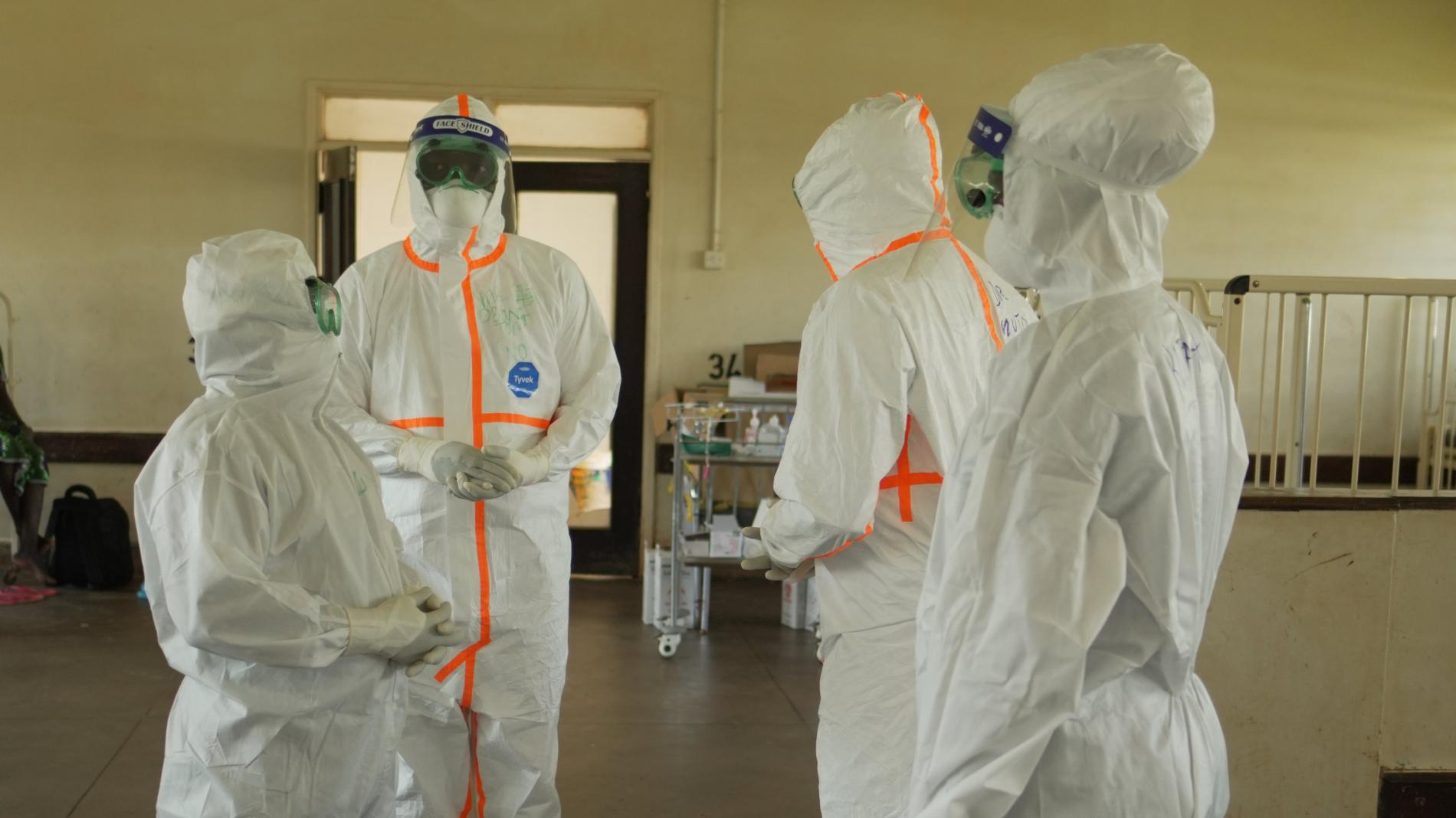
The Africa Centres for Disease Control and Prevention (Africa CDC) has confirmed a new outbreak of Ebola virus disease in the Democratic Republic of Congo’s eastern Ituri province, where at least 246 suspected cases and 65 deaths have been recorded. Health officials say the outbreak poses a high risk of spreading to neighbouring countries due to intense population movement and cross-border trade.
The outbreak was detected earlier this month in the Mongwalu and Rwampara health zones, two gold-mining towns in Ituri province. Preliminary laboratory tests conducted at the Institut National de Recherche Biomédicale (INRB) in Kinshasa confirmed Ebola virus in 13 of 20 samples, according to Africa CDC. Additional suspected cases have been identified in Bunia, the provincial capital, pending laboratory confirmation.
Initial analysis suggests the current outbreak involves a non-Zaire ebolavirus strain, distinct from the one responsible for the 2018–2020 epidemic in eastern DR Congo that killed nearly 2,300 people. Further genetic sequencing is underway to determine the specific subtype and guide medical response strategies.
Africa CDC, in coordination with the DR Congo Ministry of Health, the World Health Organization (WHO), and humanitarian partners including Médecins Sans Frontières, is spearheading containment efforts. An emergency coordination meeting held on May 15 brought together officials from DR Congo, Uganda, and South Sudan, as well as representatives from international agencies and pharmaceutical companies. The meeting focused on urgent priorities such as surveillance, infection prevention, risk communication, and safe burials.
Africa CDC Director General Dr Jean Kaseya said, “Given the high level of population movement between the affected areas and neighbouring countries, rapid regional coordination is essential.” He added that Africa CDC stands “in solidarity with the people and government of the DRC as they respond to this outbreak.”
The Ituri region, already destabilized by armed conflict and poor road infrastructure, poses major logistical challenges for health responders. Ongoing mining activities draw a transient workforce and facilitate population movement, which increases the risk of Ebola transmission. Residents have been urged to report symptoms immediately, avoid direct contact with suspected cases, and follow health authority guidance.
While the Congolese government has yet to make a formal nationwide declaration, local health teams, supported by international partners, are deploying surveillance and contact-tracing operations in affected zones. Mobile laboratories are being set up to accelerate diagnostic testing, and community outreach workers are conducting awareness campaigns in high-risk areas.
This marks Congo’s 17th Ebola outbreak since the virus was first discovered in the country in 1976. The last outbreak, declared over just five months ago, caused 43 deaths. Across Africa, Ebola has killed roughly 15,000 people over the past five decades, mostly in West and Central Africa.
Authorities warn that despite lessons learned from past outbreaks, continued vigilance is critical. Cross-border cooperation and timely access to diagnostics, vaccines, and antiviral treatments will be key to avoiding a repeat of previous large-scale epidemics.
For now, Africa CDC has urged communities to remain calm but vigilant emphasizing that swift reporting, safe practices, and coordinated regional action offer the best chance to contain the outbreak before it widens.