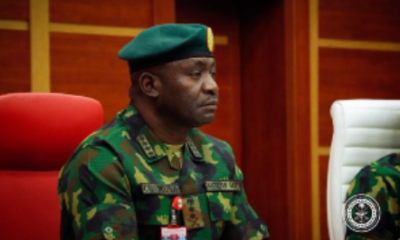
A verbal sparring match between Minister of Defence, Jacob Oboth and Kira Municipality MP, Ibrahim Ssemujju Nganda erupted in Parliament igniting a lively debate on which profession journalism or law takes longer to grasp knowledge.
The exchange which unfolded in the presence of Deputy Speaker Thomas Tayebwa left the House divided as MPs watched the two seasoned debaters trade professional jabs.
The discussion began when Minister Oboth remarked that journalists have quicker access to information compared to lawyers but argued that lawyers rely on formal and verified sources rather than social media.
“You see as a journalist, he could access information that I as a lawyer may not be able to access because as a lawyer, information has to be very formal. I don’t rely on social media. That is the difference between the two professional bodies,” Oboth stated.
Ssemujju a former journalist was quick to fire back with a sarcastic retort
“I will wait for the lawyer because, as Oboth said, lawyers take long to learn things while we journalists learn them as they happen.”
Unfazed, Oboth countered with a stinging remark emphasizing that law requires proof, verification and deeper analysis whereas journalists sometimes create their own narratives.
“With due respect, there is a difference. Here, we verify, we need proof so that we are sure of what we are talking about. But journalists can make anything and that is Ssemujju for you,” he shot back.
Deputy Speaker Tayebwa then stepped in to diffuse the tension delivering a punchline that sent the House into laughter
“I have been reminded that lawyers study for five years while journalists study for three years. Maybe that is the difference.”
While the exchange was laced with humor, it touched on deeper issues of professional respect, credibility and the evolving role of journalism in governance.
The debate highlights the long-standing friction between politicians and journalists with some leaders often accusing the media of sensationalism while journalists argue that politicians use bureaucracy to delay or obscure the truth.
Ssemujju, a former journalist who turned politician embodies the intersection of the two professions making his argument all the more intriguing.
His sharp response showcased the quickness of journalism where facts are often uncovered in real time.
Meanwhile, Oboth’s defense of legal processes underscored the careful nature of law which prioritizes caution, thoroughness and evidence based decision making.
Following the exchange, social media was abuzz with reactions. Some sided with Ssemujju praising journalists for their speed in uncovering facts while others defended Oboth arguing that the legal profession demands deeper intellectual accuracy.
Meanwhile, some Ugandans saw the exchange as a distraction from more pressing national issues such as the ongoing power crisis, the security situation and the upcoming Kawempe North by-election.
Regardless of where one stands in the law vs. journalism debate, the exchange in Parliament proved one thing both professions are indispensable to democracy. While journalists bring issues to light quickly, lawyers ensure due process and accountability.