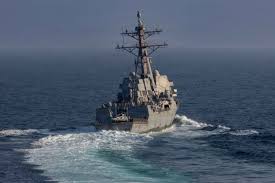
Asian powers have raised their voices concerning the battle for the Strait of Hormuz, as the Islamic Revolutionary Guard Corps (IRGC) and the US Navy fight for the control of the geopolitical chokepoint. This is on the heels of a failed deal negotiated in Pakistan over the weekend.
In the middle of the 40-day war on Iran, the country started an effective blockade of the strait, selectively letting through vessels of some countries and blocking “enemies.” It is reported that the ‘friendly’ vessels paid two million dollars for safe passage.
None of the raft of proposals from either side at the Islamabad negotiations was agreed upon, as both sides kept their hardline stances. In the immediate collapse of talks, Iran announced that every vessel that uses the strait would have to pay for its passage. US President Donald Trump declared that the US Navy would blockade the Strait, meaning that no ship would enter or leave through it.
Asian nations speak
Dr. Vivian Balakrishnan, Minister of Foreign Affairs of Singapore immediately said his country will not engage in negotiations with Iran for the safe passage of ships or negotiate on toll rates on the Strait of Hormuz.
Quoting the United Nations Convention on the Law of the Seas (UNCLS), the minister told his parliament that transit through such waterways is a right – not a privilege.
The secretariat of the Association of South East Asian Nations (ASEAN) on Monday has issued a statement on behalf of the Foreign Affairs ministers urging for calm and restraint in the matters of the strait.
“We urge all parties involved to maintain conducive conditions for the full and effective implementation of the ceasefire, including by adhering strictly to its terms, exercising utmost restraint, ceasing all hostilities, acting responsibly, avoiding any acts that may aggravate the situation and working collectively towards a comprehensive and enduring resolution in accordance with international law, the UN Charter and relevant UNSC resolutions” an excerpt of the statement reads.
But Iran says that no part of the strait is “international waters,” or “high seas,” insisting that the strait is fully in Oman on one side, and fully in Iran on the other.
Approximately 90% of the crude oil that goes through the strait of Hormuz is destined for Asia.