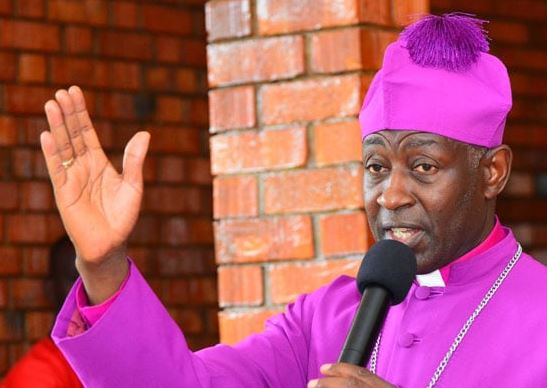
The Archbishop of the Church of Uganda, Stephen Kaziimba Mugalu, has criticized the government’s spending priorities, questioning how authorities can allocate Shs158 billion for vehicles for Members of Parliament while arguing that funding medical interns’ allowances would place an unsustainable burden on the economy.
Speaking during recent public engagements on Uganda’s healthcare challenges, Archbishop Kaziimba said the government’s position on medical interns contradicts its spending decisions in other sectors.
“You cannot say that you have Shs158 billion to purchase cars for MPs and then claim that you do not have Shs28 billion to pay medical interns’ allowances, with the excuse that it would crush the economy,” the Archbishop said.
“Doctors are rarely in the hospitals. It is the medical interns who are everywhere doing the donkey work.”
The Archbishop’s remarks come amid a growing national debate over the future of allowances for medical interns, who play a critical role in Uganda’s public healthcare system.
Medical interns are qualified doctors, nurses, pharmacists, dentists, and midwives who undergo a mandatory internship before receiving full professional licenses.
They are often responsible for much of the day-to-day patient care in government health facilities, particularly in regional referral hospitals and health centers.
The issue has generated controversy following discussions within government regarding the funding of internship programs and proposals that could affect allowances paid to interns.
Health sector stakeholders, including professional associations and civil society groups, have repeatedly argued that interns are essential to maintaining service delivery in public hospitals.
Beyond the allowances dispute, Archbishop Kaziimba has been vocal about broader weaknesses in Uganda’s healthcare system.
During the recent Martyrs Day celebrations at Namugongo, he urged government to prioritize healthcare financing and fast-track legislation for a national health insurance scheme, warning that many Ugandans continue to struggle to access treatment for serious illnesses.
He argued that disease outbreaks, cancer cases, and other costly medical conditions have exposed significant gaps in the country’s healthcare infrastructure and financing mechanisms.
The debate over intern funding has persisted for several years. Government previously reduced intern facilitation to accommodate growing numbers of trainees, while health sector leaders have repeatedly called for additional funding to ensure all eligible interns are deployed and adequately supported.
Health professionals argue that shortages of doctors in many public facilities mean interns frequently handle a substantial portion of patient care under supervision, making their deployment and welfare critical to healthcare delivery.
Archbishop Kaziimba’s comments have added a prominent religious voice to a debate that has increasingly focused on government priorities as Uganda prepares to implement its new budget.
Critics argue that funding healthcare workers should take precedence over non-essential expenditures, while government officials maintain that public resources must be distributed across competing national priorities.
Also Read: Raul Castro makes appearance, amidst US threats