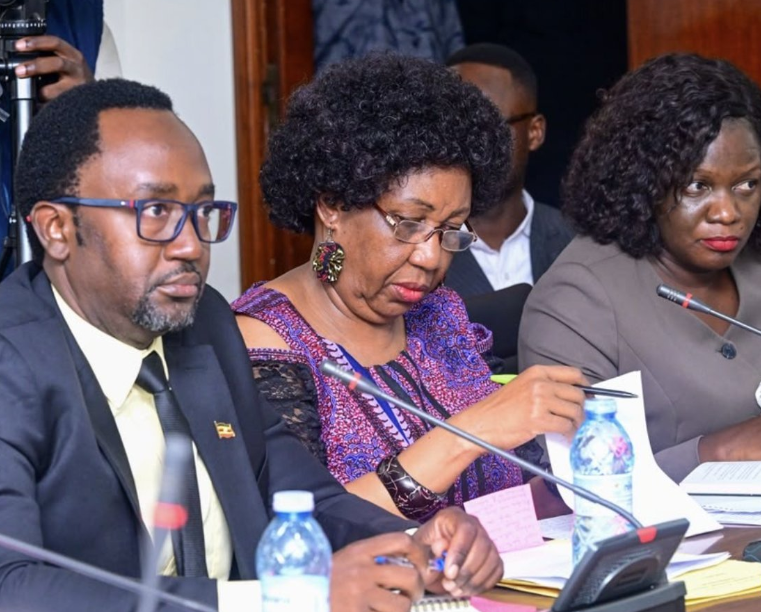
The Chairperson of theUganda Human Rights Commission (UHRC), Mariam Fauzat Wangadya, became emotional as she appeared before Parliament’s Legal and Parliamentary Affairs Committee, saying she had endured months of public criticism and personal attacks over the Commission’s work.
Wangadya was appearing before the committee to respond to questions regarding the Commission’s performance, mandate and operations when she spoke about the personal toll of recent public scrutiny.
“I have spent the past five months being terrorised by the media, receiving calls from friends and relatives who comfort me, and also from haters who tell me to go to hell,” Wangadya told lawmakers.
Video shared by local media showed the UHRC chairperson breaking down during the proceedings before regaining her composure and continuing with her presentation.
Wangadya’s appearance comes after months of public debate surrounding the Uganda Human Rights Commission, particularly over its handling of complaints involving alleged human rights violations, unlawful detention and the protection of constitutional rights.
Commission has faced criticism from opposition politicians, civil society organisations and sections of the public who have questioned its response to several high-profile cases.
Supporters of the Commission, however, argue that it continues to carry out its constitutional responsibilities despite financial and operational constraints.
Uganda Human Rights Commission is an independent constitutional body established under Article 51 of Uganda’s 1995 Constitution.
The Commission submits annual reports to Parliament assessing the state of human rights in Uganda and recommending reforms.
Public attention on the Commission intensified after Wangadya wrote to the Chief of Defence Forces (CDF), Gen. Muhoozi Kainerugaba, earlier this year regarding the continued detention of opposition politician Dr. Kizza Besigye despite a Supreme Court ruling concerning the trial of civilians in military courts.
The letter attracted widespread public debate, with some praising the Commission for defending constitutional rights, while others criticised its handling of the matter.
Wangadya has also faced criticism over the Commission’s broader response to allegations involving torture, enforced disappearances and prolonged detention.
During previous appearances before Parliament, UHRC officials have repeatedly highlighted challenges affecting the institution’s work, including limited funding.
Human rights experts say these constraints have affected the Commission’s ability to respond quickly to complaints across the country.
The Legal and Parliamentary Affairs Committee is responsible for overseeing institutions within Uganda’s justice sector and evaluating whether they are effectively carrying out their constitutional mandates.
Lawmakers are expected to examine the Commission’s financial needs, institutional independence and overall performance before making recommendations to Parliament.
Wangadya’s remarks offered a rare glimpse into the personal pressures faced by leaders of constitutional institutions as they navigate politically sensitive human rights issues.
While her emotional testimony drew significant public attention, the committee’s inquiry is expected to continue focusing on the Commission’s performance, accountability and capacity to fulfil its constitutional role.
The hearings are expected to continue as Parliament seeks further clarification on the challenges facing the Uganda Human Rights Commission and the measures needed to strengthen the country’s principal human rights watchdog.