Judiciary has introduced new restrictions on media coverage and public access ahead of the resumption of the trial of opposition figure Col Dr Kizza Besigye and his co-accused, citing security concerns and the need to protect the integrity of court proceedings.
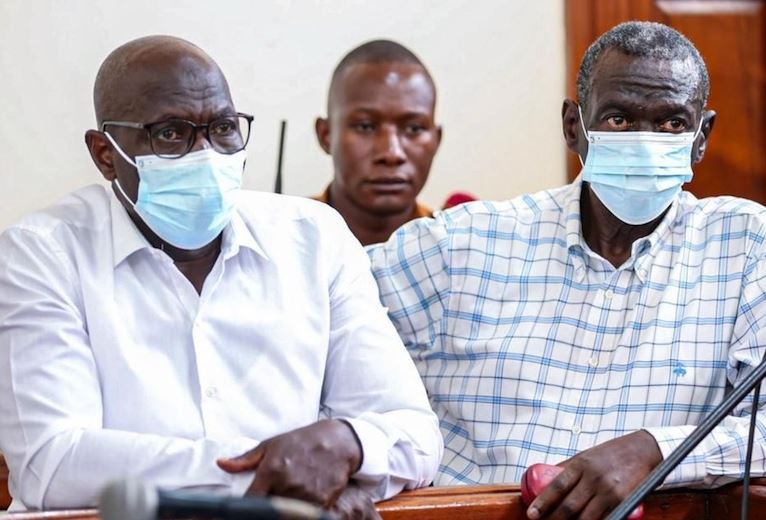
New guidelines affect proceedings at the Criminal Division of the High Court, where Besigye, Hajji Obeid Lutale and Capt Denis Oola are facing charges arising from allegations linked to national security offences (treason).
Judiciary said the measures are part of a broader security arrangement for the high-profile trial and are intended to balance public access to justice with the need to maintain order and security within the court environment.
Under the revised rules, access to the courtroom will be limited to the accused persons, their legal representatives, prosecutors, authorised court officials, accredited journalists and members of the public admitted according to available seating capacity.
Journalists wishing to cover the proceedings will now be required to obtain accreditation from the Judiciary’s Public Relations Office before being allowed into court.
“The court reserves the right to limit the number of court reporters in the courtroom depending on the space available,” the Judiciary said in its statement.
Judiciary has also announced mandatory security screening for all media equipment brought into the court premises, including cameras, audio recording devices, laptops and other electronic gadgets.
Requests for live broadcasting of the proceedings will require prior approval from the Judiciary’s Public Relations Office.
The new guidelines further restrict photography and video recording inside the courtroom, stating that images of the trial judge and witnesses cannot be taken without permission from the court.
The use of mobile phones, tablets and other communication devices inside the courtroom during proceedings has also been prohibited.
According to the Judiciary, the restrictions are designed to ensure that proceedings are conducted in an orderly manner while preserving the accused persons’ right to a fair and public hearing.
The new rules come after the Uganda Law Society (ULS) called for the trial to be broadcast live, arguing that greater public access would promote transparency and strengthen confidence in the justice system.
In a letter dated 15 July, the lawyers’ body asked the High Court to consider allowing live streaming of the proceedings, saying the public interest surrounding the case justified wider access.
ULS Vice-President Anthony Asiimwe said the organisation had received concerns from members of the public regarding the handling of the case and that some journalists had also reported difficulties accessing court proceedings.
The society argued that live broadcasting would support constitutional principles of access to justice, accountability and good governance.
It also said that allowing the public to follow proceedings directly would reduce speculation surrounding the case and encourage accurate reporting.
Dr Kizza Besigye, a veteran opposition leader and former presidential candidate, has faced several legal battles over the years, often attracting significant public and international attention.
The latest case involving Besigye, Lutale and Capt Oola has become one of Uganda’s most closely watched court proceedings, with supporters and government critics closely monitoring developments.
The accused have denied wrongdoing and challenged aspects of the case.
As the trial resumes, attention is expected to focus not only on the evidence presented in court but also on how the Judiciary manages public access, media coverage and calls for greater transparency during the proceedings.