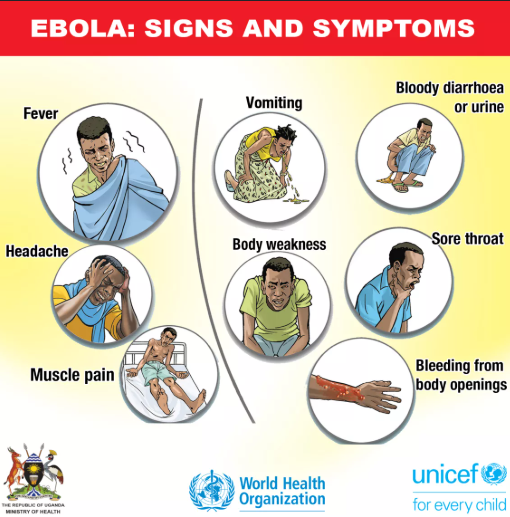
Uganda has officially declared the end of its latest Ebola outbreak, bringing to a close more than two months of intensive surveillance, contact tracing and cross-border health monitoring that tested the country’s public health system but ultimately prevented wider community transmission.
Health Minister Dr Chris Baryomunsi announced that Uganda had completed the World Health Organization’s (WHO) required 42-day monitoring period without recording a new case, meaning the country is now officially Ebola-free.
The outbreak was declared on 15 May 2026 after health authorities confirmed Ebola cases linked to neighbouring Democratic Republic of the Congo (DRC), where a much larger outbreak continues to spread.
Uganda recorded 20 confirmed cases, of which 15 were imported from the DRC and five involved Ugandan nationals. Eighteen patients recovered, while two people died from the disease.
The final patient, a Congolese national receiving treatment in Uganda, was discharged in June. Since then, health officials have monitored thousands of contacts and maintained heightened surveillance across the country before making the declaration.
For six weeks after the last patient left hospital, health authorities worked to ensure no hidden chains of transmission remained.
Under WHO guidelines, a country can only declare an Ebola outbreak over after completing 42 consecutive days-equivalent to two incubation periods without detecting another case.
During that period, surveillance teams continued monitoring communities, screening travellers at border points and investigating suspected infections.
Ministry of Health said the response involved collaboration with district health teams, security agencies, laboratory scientists, international partners and community volunteers who helped identify contacts and promote public awareness.
Uganda is one of Africa’s most experienced countries in responding to Ebola outbreaks, having faced several outbreaks over the past two decades.
That experience proved critical this time.
Health authorities rapidly activated emergency response systems, isolated confirmed patients, traced contacts and strengthened surveillance along the country’s western border, where movement between Uganda and eastern DRC remains frequent.
Officials also expanded laboratory testing capacity and deployed rapid response teams to districts considered at higher risk.
The swift response helped prevent sustained community transmission despite the proximity of one of the world’s fastest-growing Ebola outbreaks across the border.
Although Uganda has ended its outbreak, health officials caution that the risk has not disappeared.
The ongoing epidemic in the Democratic Republic of the Congo has infected thousands of people and remains one of the country’s most serious public health emergencies. Continued cross-border trade and population movement mean Uganda remains vulnerable to future imported infections.
WHO has urged countries in the region to maintain strong surveillance systems, particularly at border crossings and health facilities capable of detecting suspected cases early.
Despite celebrating the milestone, health authorities say the declaration should not be interpreted as the end of the country’s preparedness efforts.
Ministry of Health has urged healthcare workers and the public to remain alert, continue reporting suspected cases promptly and maintain infection prevention measures in health facilities.
Experts note that Ebola outbreaks can re-emerge through cross-border transmission or from animal reservoirs, making continuous surveillance essential even after an outbreak has officially ended.
For many Ugandans, this announcement marks a significant public health achievement. It reflects months of coordinated work by frontline health workers, laboratories, local leaders and international partners who succeeded in containing the outbreak before it could escalate into a nationwide crisis.