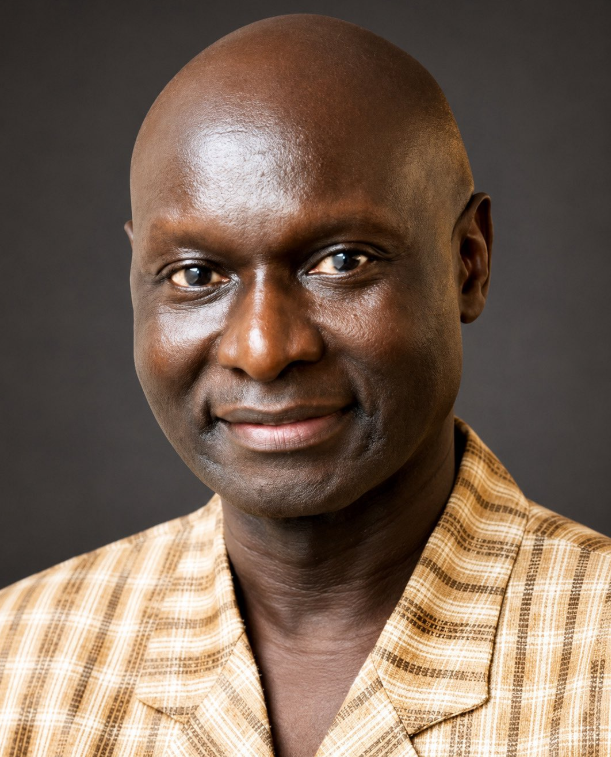
Uganda has formally nominated veteran diplomat Ambassador Olara Otunnu as its candidate for the position of United Nations Secretary-General, presenting the internationally respected statesman as a leader capable of guiding the world body through what Kampala describes as one of the most challenging periods in modern global affairs.
The announcement was made by theMinistry of Foreign Affairs on 26 July 2026, marking Uganda’s entry into the race to succeed António Guterres, whose second five-year term as UN Secretary-General ends on 31 December 2026.
In a statement, the government called on UN member states to support Otunnu’s candidacy, citing more than four decades of service in international diplomacy, peacebuilding, academia and public service.
“The Government of the Republic of Uganda has nominated and submitted the candidature of Ambassador Olara Otunnu for the post of Secretary-General of the United Nations,” the Ministry said.
Ambassador Olara Otunnu is one of Uganda’s most accomplished diplomats and international civil servants.
Born in Padibe, Lamwo District, in northern Uganda, Otunnu studied law at Makerere University before earning a Bachelor of Civil Law from the University of Oxford and a Master of Laws (LL.M.) from Harvard Law School.
He is fluent in English, French and Luo, languages that have supported his diplomatic career across Africa, Europe and the United Nations.
Over the years, he has built a reputation as an advocate for international peace, children’s rights and multilateral diplomacy.
Much of Otunnu’s international recognition stems from his service within the United Nations.
From 1998 to 2005, he served as the UN Under-Secretary-General and became the first Special Representative of the Secretary-General for Children and Armed Conflict.
During that period, he transformed what had been a relatively small UN mandate into one of the organisation’s most influential human rights offices.
He successfully campaigned to place the protection of children affected by war firmly on the agenda of the UN Security Council.
One of his most enduring achievements was helping establish the Monitoring and Reporting Mechanism (MRM) under UN Security Council Resolution 1612, adopted in 2005.
The mechanism continues to document grave violations against children in armed conflicts around the world and remains a cornerstone of UN child protection efforts.
Before joining the UN Secretariat, Otunnu served as Uganda’s Ambassador and Permanent Representative to the United Nations between 1980 and 1985.
During his tenure, he chaired the UN Security Council in December 1981, where he introduced the now-famous “Otunnu Formula.”
The formula established the use of informal “straw polls” to gauge support among Security Council members during the selection of the UN Secretary-General.
More than four decades later, the Otunnu Formula remains an integral part of the Secretary-General selection process, demonstrating his lasting influence on UN institutional practice.
Otunnu has also held senior positions within Uganda.
He served as Minister of Foreign Affairs from 1985 to 1986 and previously participated in Uganda’s National Consultative Council, which oversaw the country’s transition following the fall of President Idi Amin in 1979.
Although his later political career included periods of opposition to President Yoweri Museveni’s government, the current nomination represents a significant moment of national consensus, with Kampala endorsing one of the country’s most internationally recognised diplomats for the UN’s highest office.
Political analysts say the decision reflects Uganda’s effort to present experience and international credibility above domestic political differences.
Outside government, Otunnu has led several internationally respected institutions.
He served as President of the International Peace Academynow the International Peace Institute (IPI) from 1990 to 1998, where he worked on conflict prevention, peacebuilding and international security.
He has also taught at Albany Law School (United States), American University of Paris and Institut Français des Relations Internationales (IFRI) in France
These academic appointments have complemented his diplomatic work by focusing on international law, conflict resolution and global governance.
In recent years, Otunnu has returned his attention to peacebuilding efforts within Uganda.
Together with Chief Justice Emeritus Alfonso Chigamoy Owiny-Dollo, he co-founded Roco Paco, a community-led initiative aimed at healing and reconciliation in northern Uganda following more than two decades of conflict involving the Lord’s Resistance Army (LRA).
The programme promotes dialogue, restorative justice and community rebuilding, reflecting Otunnu’s long-standing belief that sustainable peace requires local ownership as well as international support.
Throughout his career, Otunnu has received numerous international honours for his work in peace and human rights.
Among the awards cited by Uganda’s Ministry of Foreign Affairs are Sydney Peace Prize (2005), German Africa Prize (2002) and Harvard Law School Alumni Association Award (2007)
These recognitions acknowledge his contributions to conflict resolution, diplomacy and the protection of vulnerable populations, particularly children affected by armed conflict.
The position of Secretary-General is one of the world’s most influential diplomatic offices.
The Secretary-General serves as the United Nations’ chief administrative officer, overseeing an organisation of more than 190 member states and leading international efforts on peace and security, humanitarian assistance, climate change, sustainable development and human rights.
Selection of the Secretary-General begins with informal consultations among the 15-member UN Security Council, which recommends a candidate to the UN General Assembly for formal appointment.
Any of the Security Council’s five permanent members China, France, Russia, the United Kingdom and the United States can block a candidate through their veto power, making the process as much political as diplomatic.
Although there is no formal rule requiring regional rotation, many member states have argued that the next Secretary-General should come from a region that has never held the office. Africa has produced only one Secretary-General Boutros Boutros-Ghali of Egypt who served from 1992 to 1996.
By nominating Otunnu, Uganda is seeking to elevate its profile within international diplomacy while presenting a candidate with extensive experience in both multilateral governance and conflict resolution.
Government officials argue that Otunnu’s combination of UN leadership, Security Council experience, academic scholarship and grassroots peacebuilding uniquely qualifies him to lead the organisation during a period marked by geopolitical tensions, armed conflicts, humanitarian crises and climate-related challenges.
Whether his candidacy gains sufficient international backing will depend on negotiations among UN member states in the months ahead.
Following Uganda’s formal submission, Ambassador Otunnu is expected to participate in the UN selection process alongside other candidates nominated by member states.
Security Council will conduct a series of confidential straw polls before recommending a single candidate to the General Assembly.
The successful nominee will succeed António Guterres, whose second term concludes on 31 December 2026.
For Uganda, the nomination represents both a significant diplomatic milestone and an opportunity to showcase one of its most accomplished international statesmen on the global stage. Whether Otunnu ultimately secures the world’s top diplomatic post will depend on building broad consensus among the United Nations’ membership and navigating one of international diplomacy’s most closely watched selection processes.