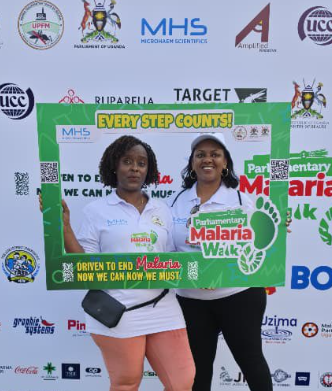
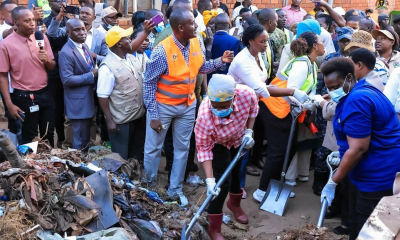
Ugandan political leaders, health officials, development partners and private sector organisations gathered in Kampala for the Parliamentary Malaria Walk, renewing calls for stronger action to eliminate one of the country’s leading causes of illness and death.
The annual awareness campaign brought together Deputy Speaker of Parliament Thomas Tayebwa, Health Minister Dr Jane Ruth Aceng, National Resistance Movement (NRM) National Chairperson for Women Lydia Wanyoto, Members of Parliament, healthcare professionals, civil society organisations and corporate partners in a public demonstration aimed at raising awareness about malaria prevention.
Held under the theme “End Malaria Now,” the walk highlighted the continued burden malaria places on Uganda’s health system and economy while encouraging greater investment in prevention, early diagnosis and treatment.
Despite significant progress over the past two decades, malaria remains the leading cause of outpatient visits, hospital admissions and preventable deaths in Uganda.
According to the World Health Organization (WHO), Uganda is among the countries with the highest malaria burden globally, accounting for a substantial share of the world’s malaria cases each year.
The disease is transmitted through bites from infected female Anopheles mosquitoes and disproportionately affects children under five years, pregnant women and rural communities with limited access to healthcare.
Health experts say malaria continues to reduce school attendance, lower workplace productivity and increase healthcare spending for families and government alike.
Deputy Speaker Thomas Tayebwa joined participants in the walk alongside Health Minister Dr Jane Ruth Aceng, who has repeatedly emphasised that malaria elimination requires cooperation between government, communities, researchers and development partners.
Officials at the event stressed that while Uganda has expanded access to insecticide-treated mosquito nets, indoor residual spraying and rapid diagnostic testing, continued public participation remains essential.
Health authorities say community awareness campaigns such as the Parliamentary Malaria Walk help reinforce preventive behaviours.
The event also attracted strong participation from Uganda’s private sector.
KCB Bank Uganda said healthier communities contribute to stronger businesses and economic growth, describing its participation as an investment in healthier families and a more productive nation.
In a statement shared during the event, the bank said combating malaria is not only a public health priority but also an economic one, as the disease continues to affect employee productivity, household incomes and national development.
The bank joined other organisations supporting awareness activities under the campaign’s message of ending malaria in Uganda.
Ugandan biotechnology company Microhaem Scientific used the event to showcase locally developed diagnostic technologies designed to improve malaria detection.
The company highlighted its Pf-Xpat Malaria Kit, which it says supports rapid and reliable diagnosis, allowing healthcare workers to identify infections earlier and begin treatment more quickly.
Company representatives said improving access to accurate diagnostic tools is essential because early diagnosis reduces severe illness, limits unnecessary use of antimalarial medicines and improves patient outcomes.
Medical experts note that laboratory confirmation before treatment is increasingly important in preventing drug resistance and ensuring patients receive the correct care.
Health specialists say malaria symptoms including fever, chills, headache and body aches can resemble other illnesses, making laboratory testing critical before treatment begins.
Rapid diagnostic tests (RDTs), now widely used across Uganda, have significantly improved the speed of diagnosis, particularly in rural health centres without microscopy services.
Parliamentary Malaria Walk placed particular emphasis on strengthening awareness about early testing rather than relying solely on self-medication.
Beyond its health impact, malaria continues to impose a significant economic burden on Uganda.
Public health economists argue that investing in malaria prevention yields substantial long-term savings by reducing treatment costs and improving workforce productivity.
Uganda has made notable gains through nationwide distribution of mosquito nets, indoor residual spraying campaigns, improved access to diagnostic testing and the rollout of seasonal malaria interventions in high-risk districts.
Ministry of Health continues to work with international partners, including the World Health Organization, the Global Fund, the U.S. President’s Malaria Initiative (PMI) and other development agencies to strengthen malaria control programmes across the country.
Parliamentary Malaria Walk has become an annual platform for bringing together lawmakers, healthcare professionals, researchers, businesses and development partners around a common public health goal.
Supporters say the event helps keep malaria high on Uganda’s national policy agenda while encouraging greater public participation in prevention efforts.
By involving political leaders alongside scientists, healthcare workers and private companies, organisers hope to demonstrate that malaria elimination requires action across every sector of society.
Organisers say awareness campaigns alone will not eliminate malaria, but they remain an important tool for encouraging preventive behaviour and sustaining political commitment.
Uganda’s long-term malaria strategy focuses on expanding access to mosquito nets, strengthening vector control, improving diagnostic capacity, increasing availability of effective treatment and supporting research into new technologies.
As participants completed the Parliamentary Malaria Walk, the message remained consistent: while malaria is one of Uganda’s oldest public health challenges, it is also one of the most preventable.